All you need to know about Fernando de Noronha
If you want to have a smooth holiday, there is a lot you need to know before visiting the VIP island in Brazil: Noronha. In this post, I wrote everything you need to know about Fernando de Noronha – when to visit, how to get there, where to stay, how many days you should stay on the island, what to do and much more.
Disclaimer: this post may contain affiliate links, meaning I will get a commission if you make a purchase through these links, at no extra cost to you. This allows me to receive compensation for the time and effort invested in creating the best content for you. Thank you for your support!
About the island
Fernando de Noronha is famous for its stunning beaches and amazing sea life. It’s one of the most beautiful islands in the world and a popular destination for snorkeling and diving. You can swim with sharks, rays, turtles and many different species of fish.
Its popularity goes beyond its beauty and extends to its prices and fees. Many Brazilians dream to visit this place that is often a luxurious holiday for many celebrities.
The conservation and management of the island is quite strict to protect the ecosystem: on some beaches, you can only enter the water with a vest in order to protect the corals; plastic is mostly prohibited on the island, and crabs are preserved: eating, catching or killing them it’s a crime, and you can get fined with R$3000-5000.
Another thing you have to know about Fernando de Noronha is that the timezone is 1+ hour from Recife, and for some reason, some phones do not automatically change (mine didn’t, and it always does). When visiting the island, have that in mind so that you don’t miss your tours, nor your flights.
Something I will never understand is why, at the time I was there, there was a difference of 1h7min instead of just 1h.
Be prepared to leave your mobile phone aside and enjoy nature. This is a perfect place for a social media detox. Internet signal is quite terrible across all island, and even places with Wi-fi don’t seem to work quite well.
Also do be aware that, just like in most places in Brazil, most people won’t speak English, and sometimes, even guides might struggle with communication, so do be prepared for that.
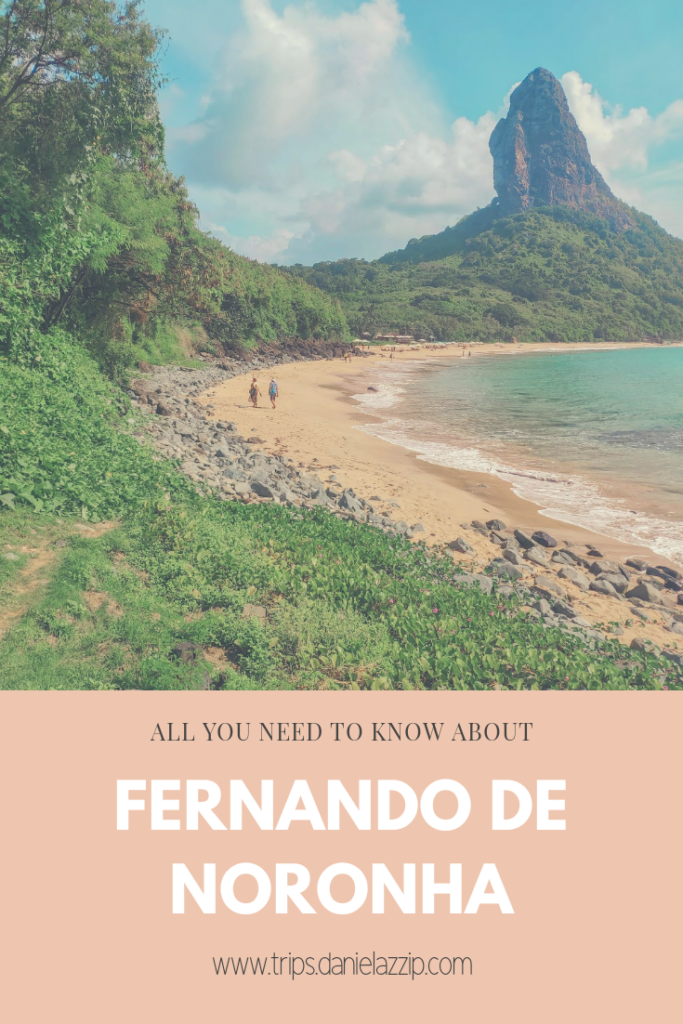
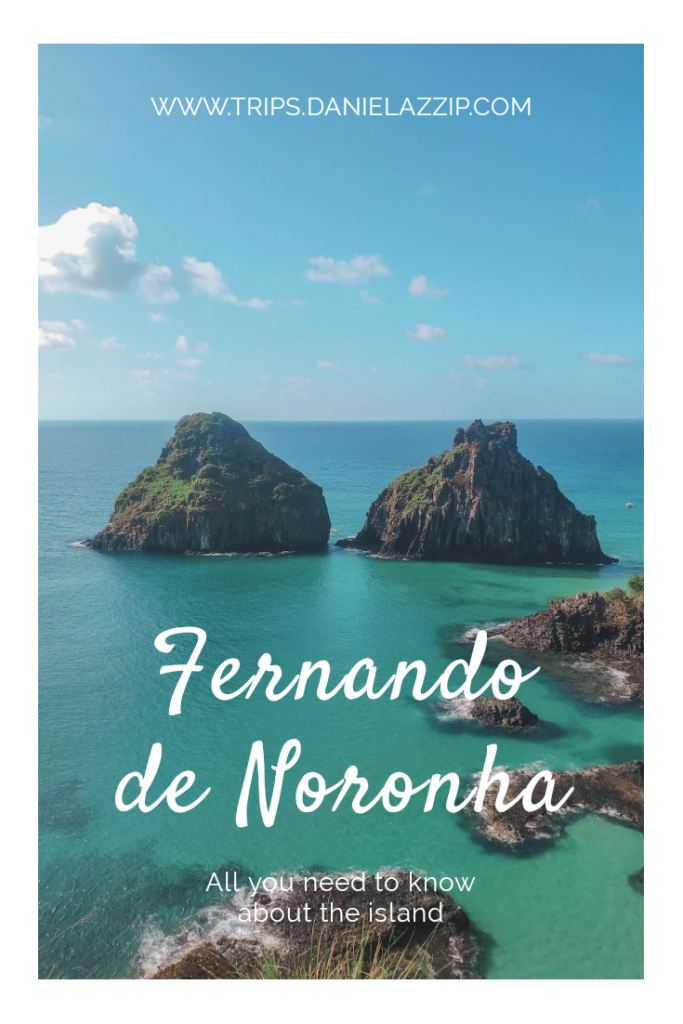
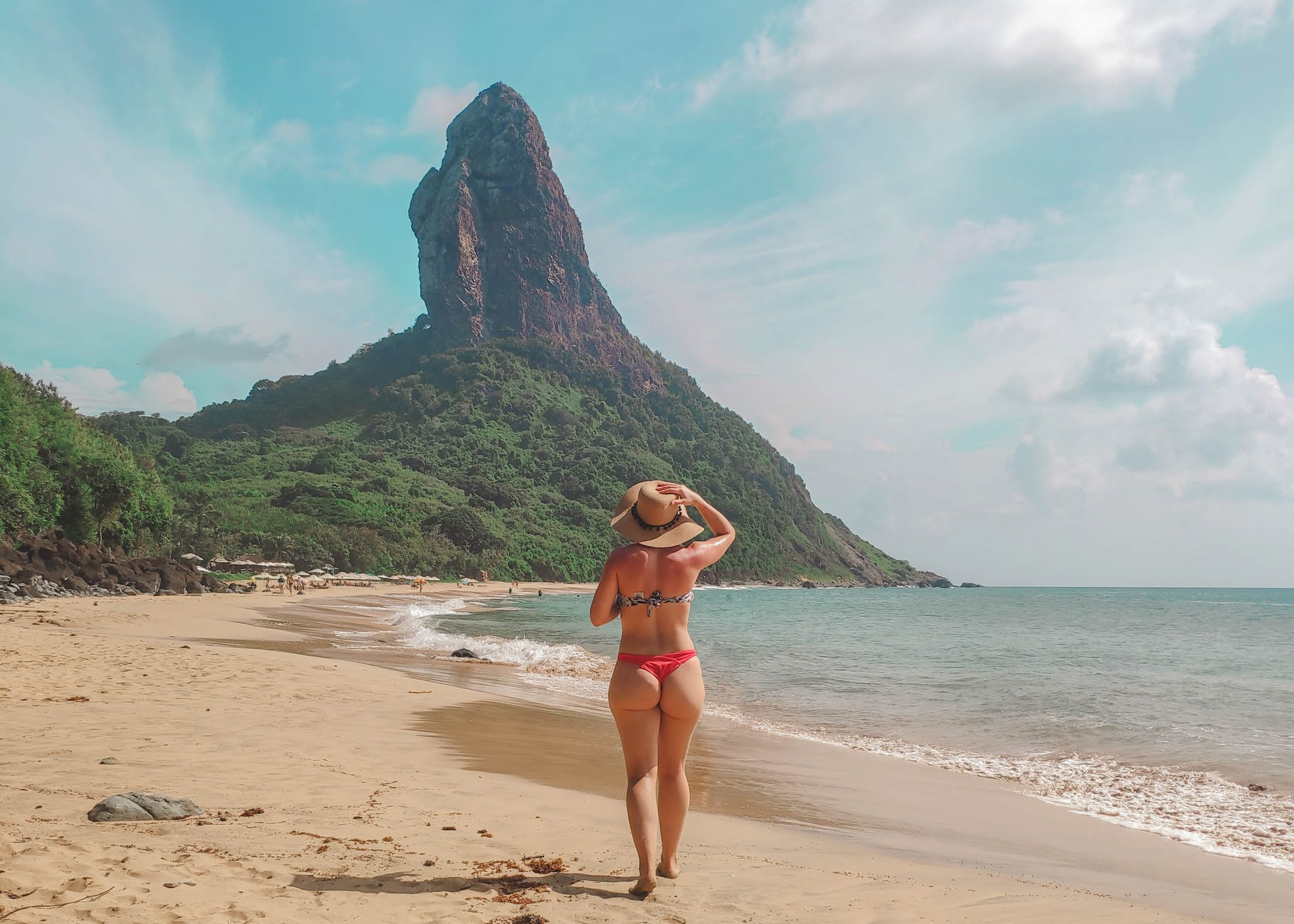
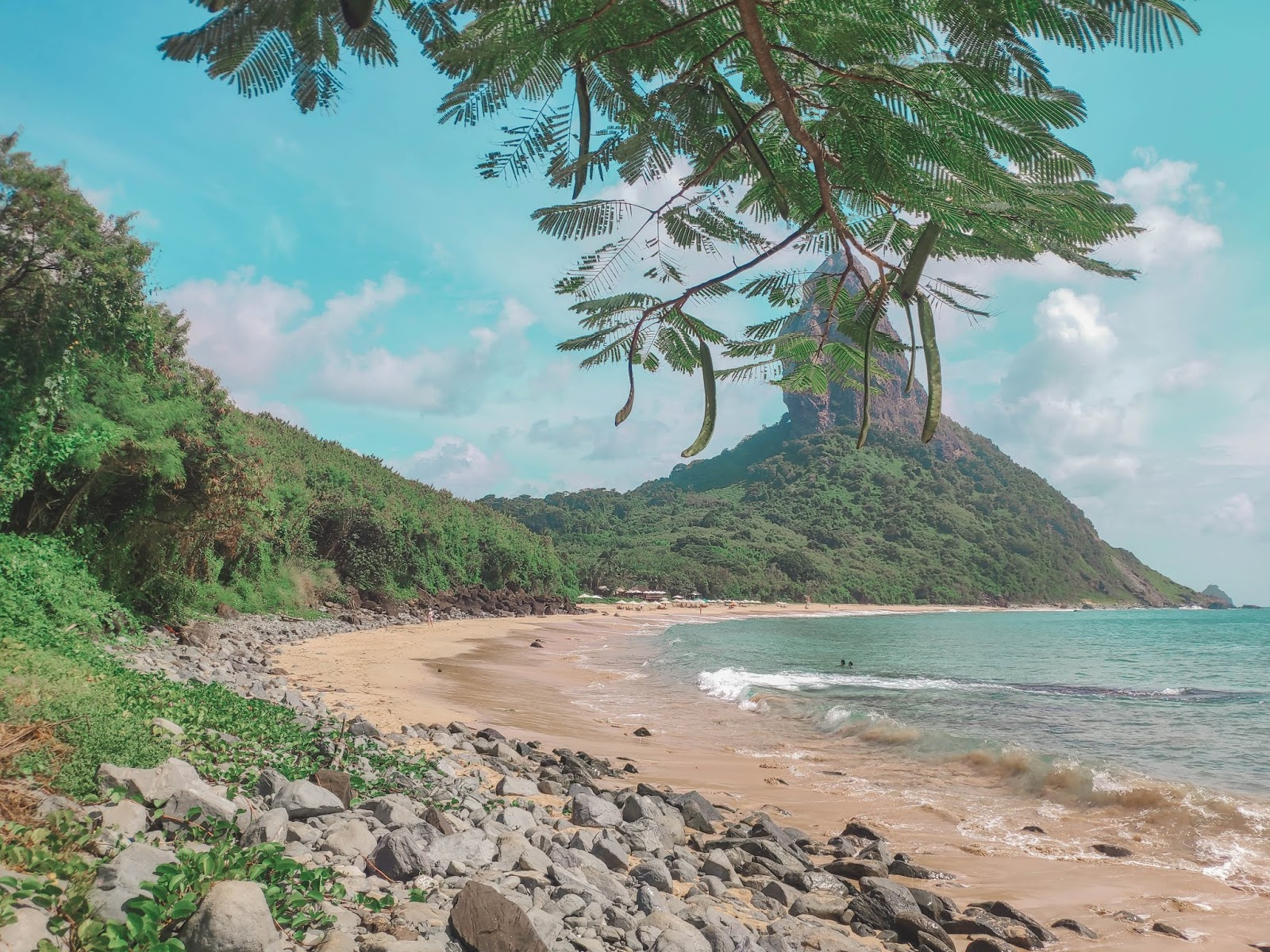
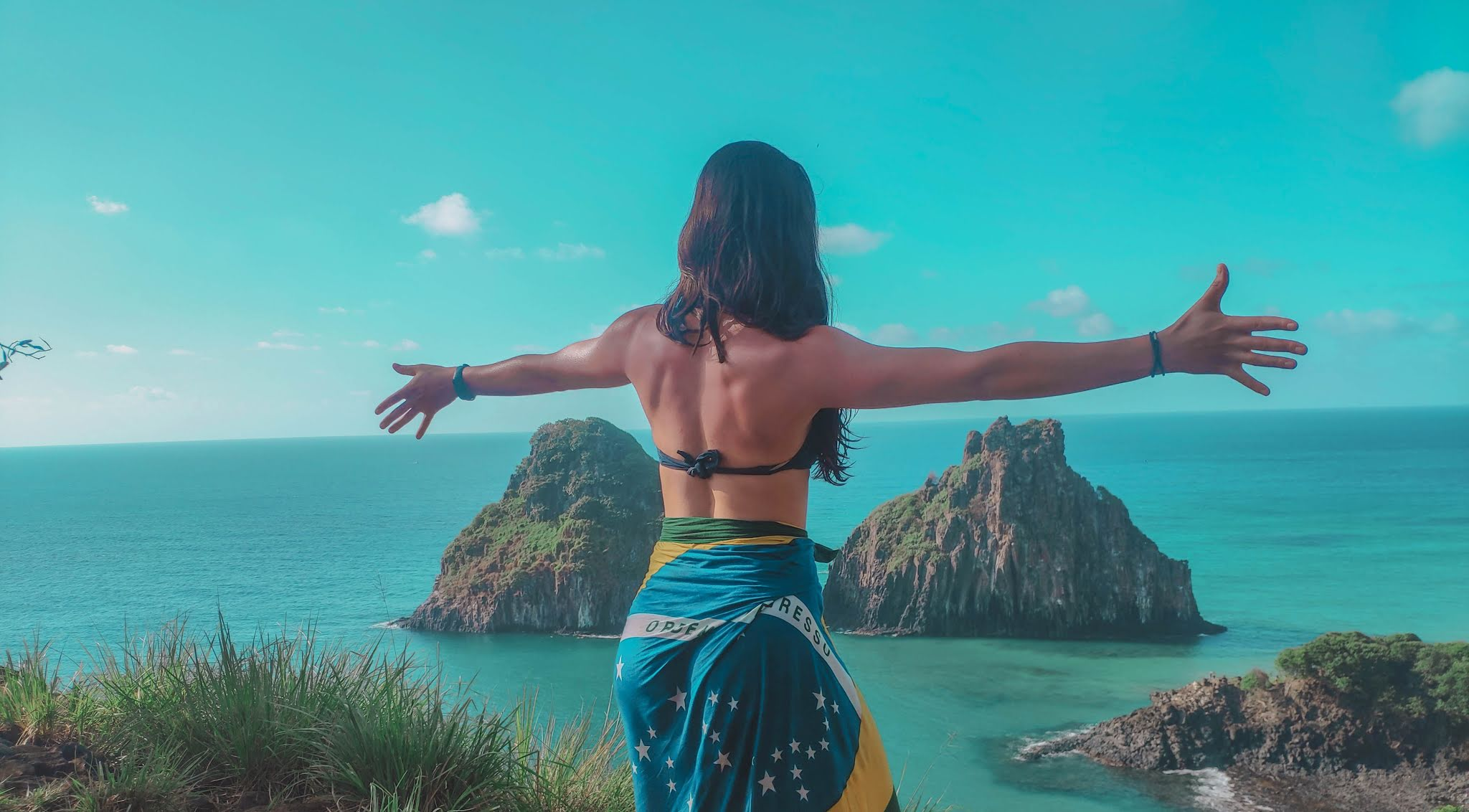
There are 2 famous rock formations on the island: Morro do Pico (a high, sharp-like hill) and Morro Dois Irmãos (two smaller twin hills, isolated on the blue waters of the island).


Morro do Pico on the left and Morro Dois Irmãos on the right
ICMBio – If you have done some research on Fernando de Noronha, I am sure you have heard/read this word many, many, many times. If you want to have a chilled visit without any problems, this is one of the things you have to know about Fernando de Noronha: understand what entity they are, why you need to contact them and where their centre is located. The ICMBio protects and preserves the biodiversity on the island and is responsible for controlling the beaches and hikes. Their base is located at Boldró Villa (Alameda do Bodró). Here, you can book hikes that require booking (and potential payment if a guide is required. No online booking available) such as Atalaia, Abreus and São José, as well as purchase or collect (if you bought previously online) the PARNAMAR card, a card that will give you access to some beaches likes Sueste, Sancho, Leão and Atalaia. It is highly advised that you make this your first stop on the island, so you can guarantee your space on booking-required activities, and you can understand what your requirements are for each of them. Times might change in the future, but the Visitors Centre is currently open from 8am until 10pm, and self booking is available from 5pm till 9pm.
How to get to the island
When reserving your seats, make sure you pick the ones on the left of the airplane, so you can see “Morro Dois Irmãos” on landing.
Upon arrival, you have to fill out a migration control form and pay for an environmental preservation fee (I explain this in detail in another blog post, where I talk about How expensive is Fernando de Noronha). Afterwards, they ask where you’re staying, so they can get you in the right bus. The bus is actually run by a travel agency which of course, is interested in having people buying their packages and tours. Before they take you to your hotel/hostel, they stop at their base for a “quick” presentation, where they show you the main attractions in the map, give you an insight into the island rules, and as I said, try to get you to book tours with them.
While the bus transport is free, if you have already arranged your deals in advance (which I highly recommend), you should consider taking a taxi to your place or to the ICMBio Centre to save you some time and boredom.
Buy your flights to Fernando de Noronha
When to visit the island
One of the most important things to know about Fernando de Noronha is when to visit it. The best time to visit the island is August to September for a calm, flat ocean (ideal for snorkeling and floating) and December to March for stronger waves (ideal for surfing and other extreme aquatic activities). New Year’s Eve is a popular celebration on the island, which makes it pricey and crowded over December and January – so if you’re into surfing but prefer to run from the crowds and spend less money, February to March would be an ideal time for you. July is generally a pricey month too.
Even though the weather is quite good throughout the year, the likelihood of rain between March and June is higher than usual. That being said, Noronha is an island, and the weather can be unpredictable. Be prepared for the possibility of rain, even if you’re visiting at a different time.
If you encounter the possibility of rain, don’t make it stop you from going out and enjoying what the island has to offer: wear a raincoat, choose appropriate activities such as the “boat tour” and visiting Tamar Project, and protect your camera gear, or you might end up with a useless DSLR camera (just like it happened to me).
For low budget travellers, the cheapest time on the island, as you might guess, are the rainy months, from April to June.
On top of that, if you get the chance, pay attention to the tide levels as there are plenty of things you can only visit or do during low tide.
How many days on the island?
The amount of days you need on the island is completely dependent on what you want to do. If you want to enjoy all beaches and visit the same spots more than once (which I am sure you will want to) and, of course, you can afford it, a week in this paradise will be ideal. If you want to take advantage of most activities and do some beach days, 5 days it’s generally a good idea. If you’re short on time, you can stay 2-3 days and enjoy some of the main attractions which will give you an idea of what the island has to offer. I was there for two days and a half and managed to visit most of the island through Ilha Tour, did a Boat Tour, and even walked along the beaches that were not included in the tour.
In summary: regardless of how many days you will stay, you will love it. You just can’t get bored on this island. However, if you really want a number of days, then 5 would be ideal – especially if you want to do Atalaia beach – understand why on our guide do Fernando de Noronha beaches.
Where to stay
The accommodation on the island is another very important thing to know about Fernando de Noronha. The most popular area to stay at is “Vila dos Remédios”, although you can stay almost anywhere on the island since it’s a quite small place. There are all sorts of accommodation, for all types of budget: luxury hotels with pool and amazing views, family-friendly houses converted into hotels and hostels.
You can also find some hosts listed on Couchsurfing, but only few, and most of them are inactive.
I wrote a blog post with all the details on where to stay in Fernando de Noronha. Please have a read if you’re planning your stay.
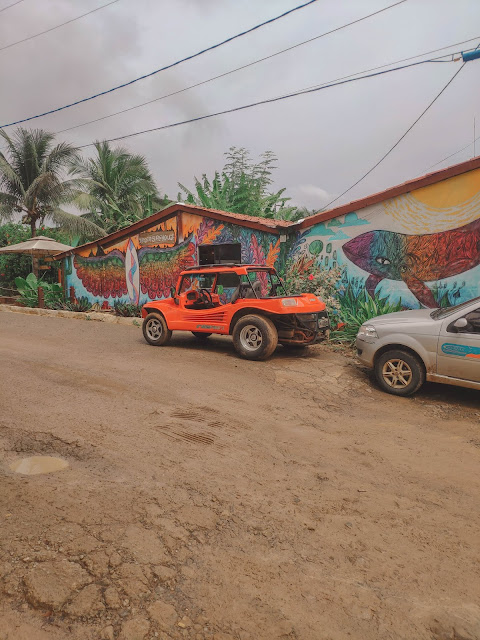
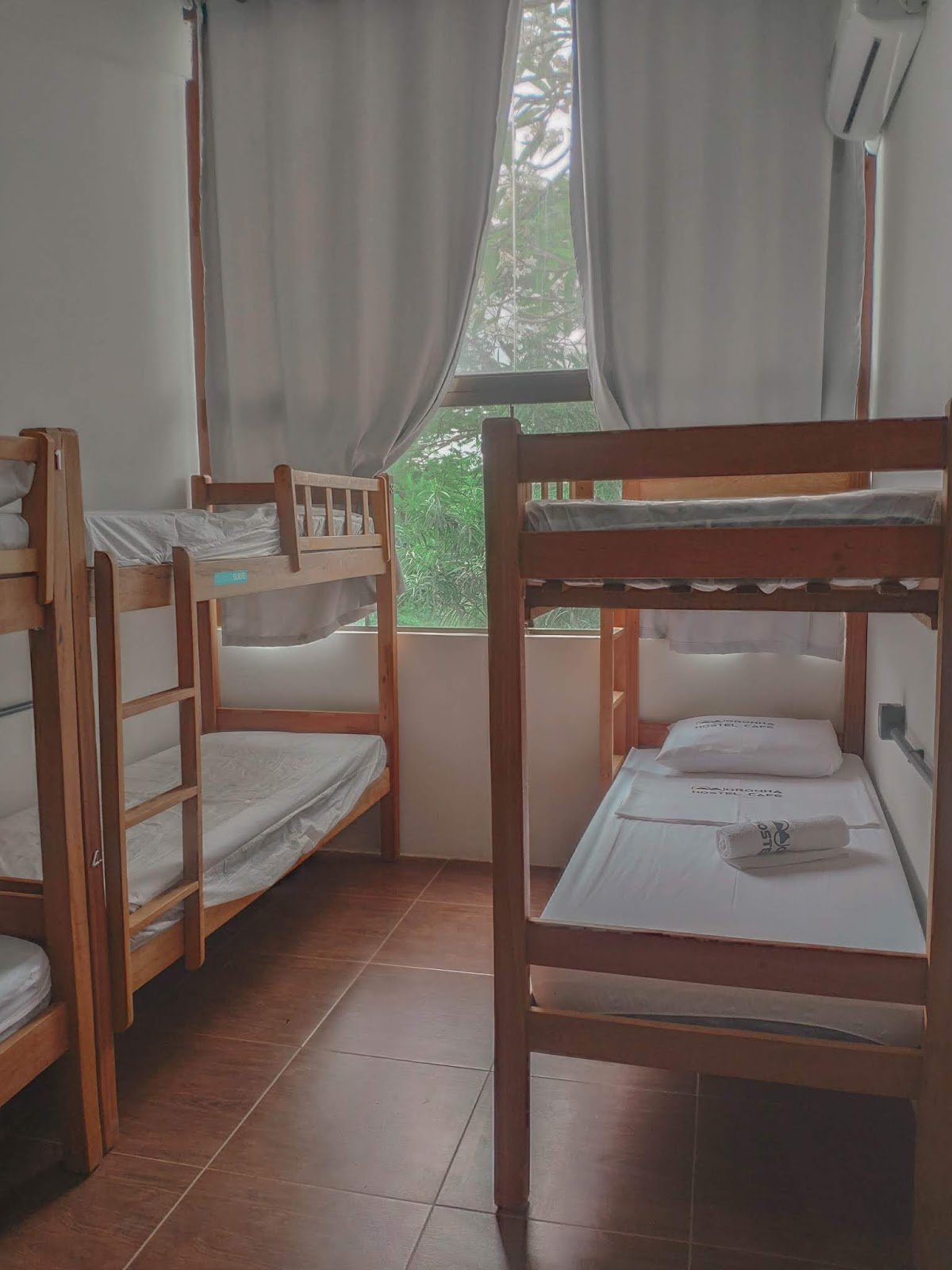
During my trip to Fernando de Noronha, I stayed at Boldró Surf House
How to commute on the island
One of the things you certainly need to know about Fernando de Noronha is how you commute on the island. There are many different ways, so I will start from the cheapest, and go up to the most expensive.
- By foot: as I said, it’s possible to commute almost everywhere by foot, and when you need to travel a bit further, you can take a bus or taxi. Just bear in mind that without mobile signal, you won’t be able to access Google Maps, unless you download the map offline (highly recommend!)
- By bus: you can take the bus that serves the island from “Sueste” to “Harbour (Porto)” at any of the bus stops, paying R$5 cash to the driver. The bus runs every 30min and covers most places on the island. Click here for bus route and schedule.
- By taxi: you can call a taxi on (81) 3619-1314. On average, a journey will cost you between R$20 and R$40. You can check this table for approximate taxi’s prices.
- By buggy: if you fancy hiring a buggy, you will have to pay about R$250/day (or more) and add R$5/litre for fuel. It is an easy, and fun way to commute, but surely the most expensive and less environment friendly
What to do
I wrote a whole post on this (10 Things to do in Fernando de Noronha), but here are the main attractions: Ilha Tour, which I would recommend doing on the very first day, snorkeling, boat tour, attending a TAMAR project presentation, watching sunsets and of course, relaxing at the beach.

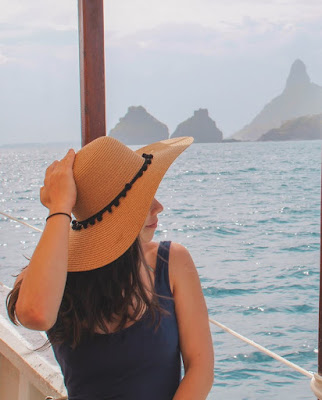
On the left: Stunning view to Morro Dois Irmãos – photo taken by our guide during Ilha Tour. On the right: Enjoying the views over the Boat Tour
How much will I spend
One thing you need to know about Fernando de Noronha is that not everyone can afford to visit the island, and so, this is often a dream island for most Brazilians, and a holiday resort for wealthy people and celebrities. I wrote a complete guide on all expected expenses on the island to help you plan your trip according to your budget. Read “How expensive is Fernando de Noronha?”
If you get a chance to meet the locals, you might hear about how unhappy they are about living there. Prices on the island are absurd, and even though they do receive a higher salary than other places in Brazil, this is still not sufficient to cover the massive difference in prices.
Safety
Fernando de Noronha was probably the place I felt the safest while in Brazil. It’s an extremely expensive place to visit, so beggars and thieves won’t be taking a trip here, and those living on the island need to have a work contract or be natives.
It is ok for you to walk by yourself, meet with locals, and it’s a super quiet, chilled place.
If you know me, you know that I am quite cautious, but sometimes I take risks, and I fully enjoy the benefits of those risks I take. I met a coconut seller who I left my belongings with while taking photos at “Buraco do Galego”, and I met a native who invited me for a Barbecue at his place, and I went (we even got a free buggy trip!).
That being said, always be aware of your surroundings and pay attention to anything that might not look right.
Read more about Fernando de Noronha
What to bring
There are shops available for you to buy stuff in case you forget or you run out, but remember that prices on the island are sometimes 4x the regular price anywhere else in the country, so bring the necessary with you, and your wallet will thank you.
CLOTHING
Dressing in Noronha is not complicated. Because of the type of activities you do, you will be spending most of your time in your swimwear and flip-flops. For the night, you might want to dress nicer and have a light jacket, but that’s the only occasion.
▇ Swimwear (Bikini / Swimming suits / Shorts)
▇ Swimwear cover or light, bright clothing: spending the whole day under the sun can be dangerous to our skin. Applying sunscreen is one way to protect it, and covering our body with light clothing is another one. Swimwear covers are super popular in Noronha.
▇ Hat
THE ESSENTIALS
▇ Sunscreen: this will definitely be my first recommendation. The sun in Noronha is no joke, and even if you’re not spending the day at the beach, you can get badly burnt during hikes and activities such as Ilha Tour. Make sure you apply it from the very moment you leave your accommodation and reapply every 2-3h, as well as every time you leave the water. The worst sunburn I got while on my trip to Brazil was during Ilha Tour.
▇ Insect repellent: remember you’re on an island, in Brazil. Insect repellent is extremely important during your trip here
▇ Cash: some agencies or hotels/hostels might not accept cards, and there have been cases where ATMs (and there aren’t many) stopped working, as well as the card machines at certain restaurants. Having cash will avoid the worst-case scenario. There are also cases where you can get a discount if you pay for a service or product with cash, which can come in handy
▇ Brazilian combing cream (“creme para pentear”): having your hair in salt water and blown by the wind can damage it pretty quickly, but the famous Brazilian combing cream can sort your problem out. Just apply it after showering, and you will see how easy it is to brush your hair afterwards. You can buy this at the airport before getting to the island for a cheaper price, or in any supermarket/small shop that has hair products in the country.
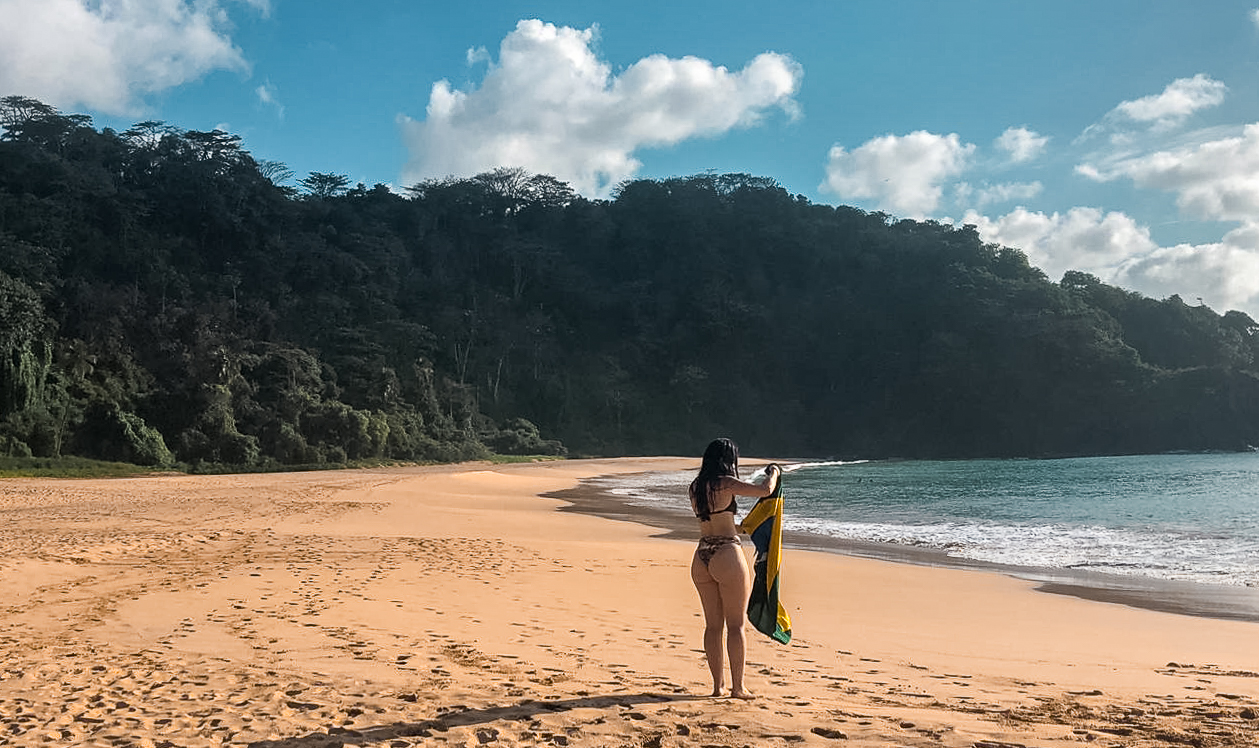
LOW BUDGET
▇ Food and drinks: if you are on a budget and you have space on your luggage, consider taking food and drinks on the flight, so you can save on meals
▇ Thermal bag: this is actually a thing in Noronha. Many people bring a thermal bag so they can buy drinks and food, and carry it with them at a nice temperature, instead of eating or drinking at a bar/restaurant. Enjoy a lovely picnic on the island, but make sure you don’t litter!
▇ Snorkel equipment: if you have it, bring it with you, as you will be able to save some money on equipment hiring.
CAMERA EQUIPMENT
For those who want to register the amazing moments spent on this beautiful Island. Be aware that, because of their restrictions, drones are not allowed at all on the island, and selfie sticks can be used, but never underwater.
▇ Cameras (mirrorless, DSLR, action camera, 360, Polaroid…)
▇ Camera lens (portrait, wide lens, zoom…)
▇ Camera accessories (cleaning kit, batteries, extra lens caps, memory cards, filters…)
▇ Dome (for those “half/half” underwater pictures)
▇ Rain cover for all electric equipment
Plan your Trip
Resources for your trip
A page with everything you need to plan a smooth and safe visit






Where to Stay in Fernando de Noronha
Luxurious hotels and guest houses: Pousada Maravilha, Colina Pousada SPA and Teju-Açu Ecopousada
Budget hotels/apartments/guest houses: Noronha 350, Casa da Albertina, Martinelli Residence and Fulô de Mandacaru
Budget hostels: Boldro Surf House (where I stayed at. You can read about it HERE), Estação Noronha Hostel and Doce Lar Hostel Noronha
Read more about Fernando de Noronha
-
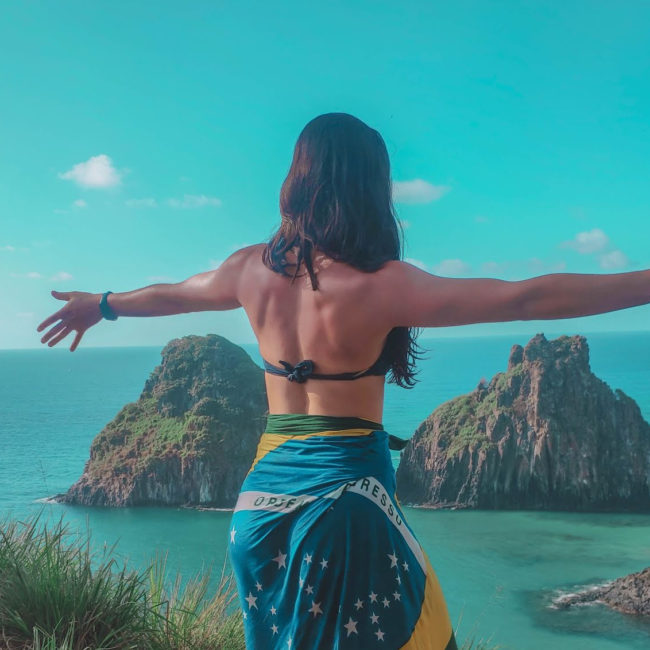
All you need to know about Fernando de Noronha
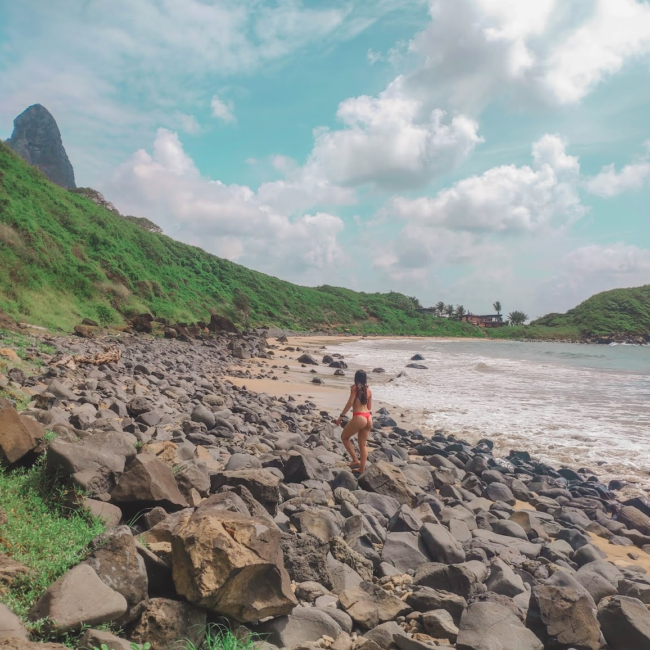

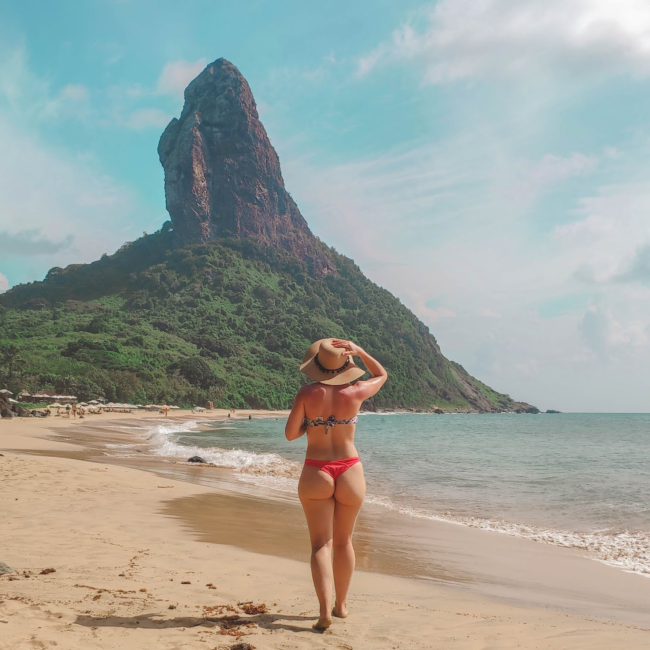
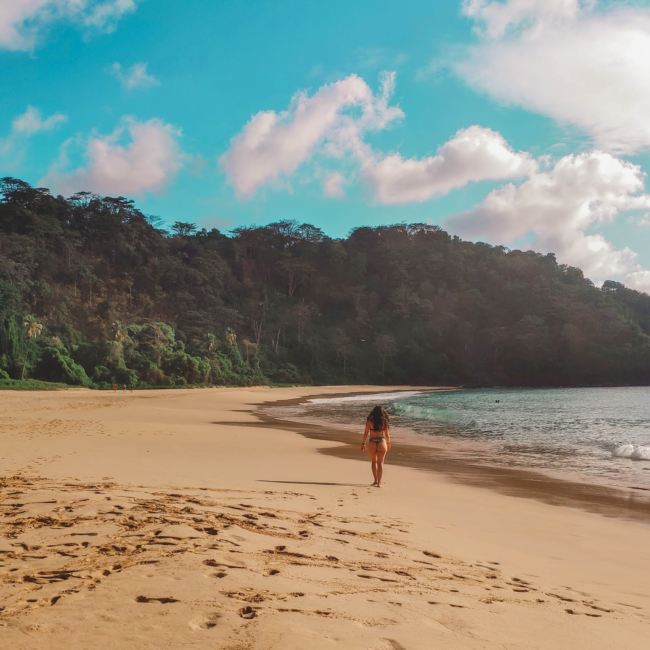
And that’s it, your complete list of all you need to know about Fernando de Noronha! Make sure you check out other posts about the island to fully prepare for your trip, and I will leave below a map I made to facilitate navigation in Fernando de Noronha 🙂 You can also find a very good map online, but sadly, only in Portuguese.
Tips to use the map above
- You will find different layers on this map, showing you all points of interest by categories. To see these, click on the tab icon (top left). All layers will be enabled by default. By clicking on the check marks, you can disable/hide a specific label to better understand the info you’re looking for.
- To view more detailed information on any point of interest, click on it’s icon over the map.
- You can save this by clicking on the star on the top of the map (right next to the title). This will be added to your Google Maps, and you will be able to access it from any device (Google Maps – Your Places – Maps)
📍 Did you like this post? Pin it for later